.png)
Opening a restaurant in Vietnam: advice from an entrepreneur who took the leap
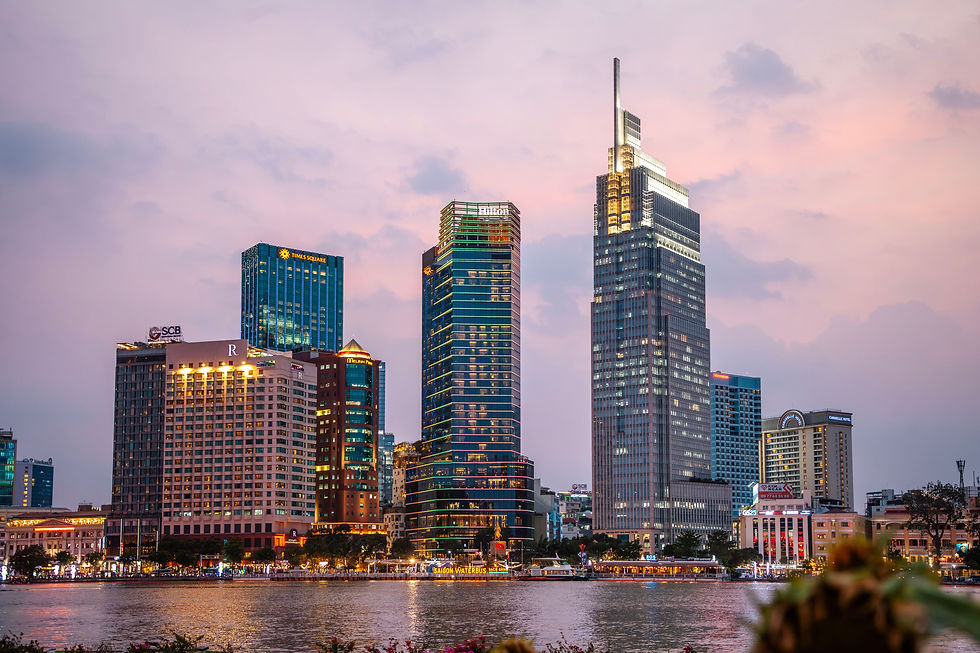
With nearly 102 million inhabitants, a growing middle class, and an international population concentrated in its major cities, Vietnam offers a particularly attractive environment for restaurant entrepreneurs. In Ho Chi Minh City, the culinary scene has expanded considerably in recent years, driven by both Vietnamese consumers and an increasingly international population.
But behind this apparent ease lies a much less obvious reality: opening a restaurant in Vietnam is not simply about finding a location, serving good food, and waiting for customers to arrive.
Tony, a Franco-Vietnamese entrepreneur who has been based in Ho Chi Minh City for several years, experienced this first-hand. Passionate about cooking since the age of eight, he eventually decided to turn his passion into a professional project and opened Maison Tony, a restaurant located in a villa in Thao Dien.
His journey provides valuable insight into the main realities foreign entrepreneurs need to prepare for before entering Vietnam's restaurant industry.
Vietnam: A Growing Gastronomy Market
Vietnam's restaurant industry is evolving alongside the country's rising standard of living.
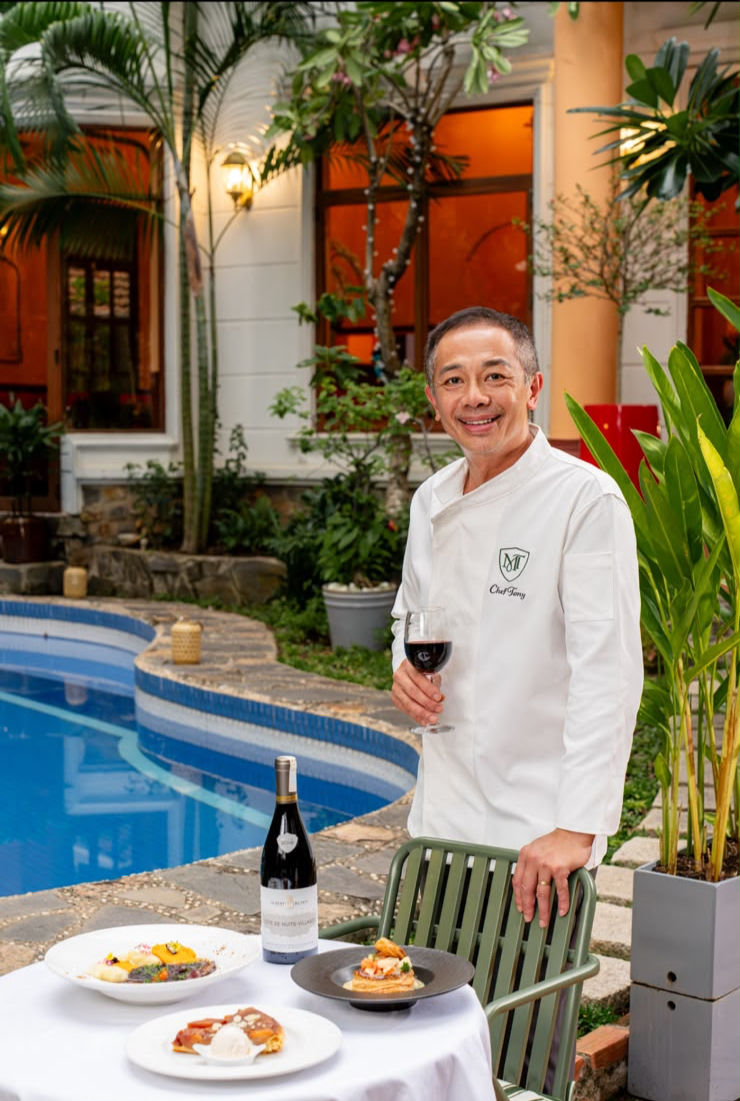
The development of the middle class, rapid urbanization, and the growing presence of an international population are creating a new type of demand. Customers are no longer looking only for affordable meals. They are also looking for experiences, quality products, and new concepts.
Ho Chi Minh City concentrates a significant share of this demand. In districts such as Thao Dien, Vietnamese restaurants now stand alongside French, Japanese, Korean, Italian, and international establishments.
This diversity creates considerable opportunities for foreign entrepreneurs. But it also creates a specific challenge: who are you actually trying to sell to?
The First Challenge: Understanding a Diverse Customer Base
International cuisine in Vietnam cannot always be approached as a simple transfer of a European concept.
A dish that works in France will not necessarily have the same success in Ho Chi Minh City. Eating habits, portion sizes, levels of sweetness, saltiness or acidity, and even the way meals are shared can be very different.
Tony therefore chose to primarily offer French cuisine, while considering how it could be received by Vietnamese customers.
His restaurant now attracts French and Vietnamese customers, as well as Japanese and Korean clients. This diversity requires finding a balance: offering cuisine that is familiar enough to appeal to local customers, without losing the identity of the concept.
The challenge is particularly visible when it comes to desserts. In traditional Vietnamese dining, desserts occupy a very different place from the one they have in French gastronomy. For Tony, this difference became an opportunity rather than a constraint.
Products that may seem ordinary to a French customer can therefore become a genuine discovery for a Vietnamese client.
In international hospitality, the challenge is not only knowing how to cook. It is knowing who you are cooking for.
The Customers Are There. You Still Have to Keep Them Coming Back.
Tony quickly succeeded in building a customer base around his restaurant. But his main advantage was not simply what he served on the plate.
He chose to build a very personal relationship with his customers: introducing the dishes, explaining the ingredients, taking the time to interact with them, and understanding their preferences.
This proximity became a genuine customer-retention strategy.
In a market where restaurants are multiplying, differentiation does not always come down to the product alone. It can also come from the experience.
Customers do not necessarily return only for a particular dish. They come back because they know the owner, feel recognized, and know what they will find when they return.
For a foreign entrepreneur, this relationship can also become one of the first drivers of word-of-mouth growth.
French Cuisine Has a Place to Grow in Vietnam
French gastronomy also has genuine potential in the Vietnamese market. But once again, simply reproducing what works in France is not enough. The real challenge is to introduce a cuisine and its products while taking local habits and expectations into account.
This is particularly relevant in Ho Chi Minh City, where Vietnamese and expatriate customers share the same restaurants. Local customers may be curious to discover French cuisine, while expatriates may sometimes be looking for familiar flavors. The restaurant therefore has to find its own balance.
This is precisely what makes Maison Tony's positioning interesting: primarily offering French cuisine in a warm setting, with good-quality products and an accessible approach, without trying to replicate a traditional French restaurant exactly. Desserts also represent an opportunity for innovation, with an offering that remains very different from French habits.
For an entrepreneur, the opportunity therefore lies less in simply “selling French cuisine” than in the ability to make French gastronomy understandable and appealing to a customer base that may not necessarily share the same culinary references.
Even Speaking Vietnamese Is Not Enough
Tony nevertheless has an advantage that many expatriates do not: he was born in Vietnam and speaks Vietnamese.
One might therefore assume that the main barrier to establishing a business does not exist in his case.
His experience shows exactly the opposite.
Having left Vietnam at the age of 12 and no longer holding the same status as a Vietnamese resident, he still faces certain administrative and legal constraints. His experience has shown him that speaking the language does not necessarily mean understanding how the country's administrative or legal systems work.
Setting up a company, dealing with procedures, visas, work permits, accounting, and tax obligations all require highly specific knowledge.
And in an environment where regulations regularly evolve, an administrative mistake can quickly become costly.
Tony experienced this first-hand with an initial accountant whose work was not properly carried out. A delay in filing the required documents resulted in a fine of VND 30 million.
An amount that may seem limited compared with the overall investment, but which illustrates an important reality: small administrative mistakes can quickly become significant costs when a restaurant is still in its early stages.
Building the Right Team: From Accounting to Real Estate
In a restaurant project, the professional network surrounding the entrepreneur can be just as important as the concept itself. Accounting, taxation, finance, real estate, administrative procedures, and negotiations with suppliers are all areas that can quickly become complex for a foreign entrepreneur.
Tony experienced this in particular with an initial accountant whose work was not properly carried out. A delay in the required filings ultimately resulted in a VND 30 million fine. A situation that could have been avoided with the right support from the outset.
Real estate requires the same level of caution. The choice of location, lease conditions, the owner's situation, the necessary permits, and any work required should all be checked before committing. In the restaurant industry, a poor real estate decision can quickly represent several months of expenses before the doors even open.
For Tony, as for many foreign entrepreneurs, the real challenge is therefore less about knowing everything than knowing who to trust. A reliable accountant, lawyer, real estate professional, and network of trusted local contacts can save time, prevent costly mistakes, and allow the entrepreneur to focus on what actually creates value for the business.
In Hospitality, the Location Is Part of the Concept
Finding a location is not simply a question of size or rent.

In the restaurant industry, the location must match the positioning, the target clientele, and the experience the entrepreneur wants to create.
Tony understood this after his first experience. His restaurant was working and he had built a customer base, but the location did not fully match the ambition of the project.
He wanted more space, a more premium environment, and above all, a place that reflected the positioning of accessible yet high-end French cuisine.
It was ultimately with professional support during his search that he found the location for Maison Tony, in a villa in Thao Dien.
The result is more closely aligned with his concept: a calm, warm, and peaceful environment, with particular attention paid to the customer experience.
A restaurant can have good food and a strong customer base. If the location does not tell the same story, the concept remains incomplete.
French Cuisine Designed for the Vietnamese Market
Tony never wanted to reproduce in Asia a French restaurant exactly as he might have opened one in France.
His ambition is different: to offer primarily French cuisine, with quality products and a more accessible approach, in an environment suited to both local and international customers.
It is a subtle positioning.
French customers looking for highly traditional French cuisine already have many options in Ho Chi Minh City. Maison Tony's objective is different: to introduce this cuisine to a broader audience while maintaining its identity.
This approach is particularly interesting in a market such as Vietnam, where foreign entrepreneurs constantly have to balance preserving their concept while adapting it to the market.
Adapt it too much, and the concept loses its identity.
Do not adapt it enough, and it may never find its customer base.
The Restaurant Industry: Difficult, but Accessible
Tony was not a restaurateur in France. His profession was hairdressing.
Cooking was first and foremost a passion he had cultivated since childhood. He learned by cooking, observing, and reproducing the recipes he discovered.
He never wanted to open a restaurant in France, particularly because of the administrative complexity, costs, and industry regulations.
Vietnam eventually offered him an environment where he felt that this passion could become a professional activity.
There is an important difference here compared with certain Western markets: it is not necessarily required to follow the same academic or professional path to enter the restaurant industry.
This does not mean that the profession is easy.
Quite the opposite. Hospitality remains one of the most demanding industries: team management, sourcing, hygiene, consistent quality, customer relations, costs, and communication all have to be managed simultaneously.
But for an entrepreneur with the necessary capital and a solid concept, the Vietnamese market still offers a certain degree of flexibility when it comes to creating a new business.
The Real Challenge Is Not Opening. It Is Lasting.
Maison Tony is still in its first few weeks of operation, but the initial results are encouraging.
Customers are responding, and the restaurant's warm and peaceful positioning appears to be finding its audience.
The next stage, however, will be the most important: turning initial curiosity into a regular customer base.
This is where the real economics of a restaurant come into play.
In a market as competitive as Ho Chi Minh City, opening a restaurant creates visibility. Quality creates reputation. But only customer retention can build a sustainable business.
For Tony, this retention comes in particular through direct relationships with customers, but also through the ability to maintain consistent quality.
Passion Is Not a Substitute for Strategy
Tony's story ultimately illustrates a broader reality of entrepreneurship in Vietnam.
Having a passion, capital, or even a customer base does not guarantee the success of a project.
Entrepreneurs need to understand the market, find the right location, comply with administrative requirements, control costs, and above all surround themselves with people capable of navigating the local environment.
Tony already had several of these elements when he started. His experience nevertheless shows that even with knowledge of the language and the country, certain stages remain difficult to navigate alone.
Today, with Maison Tony, he is turning a passion that has lasted for decades into a genuine entrepreneurial project.
His journey above all serves as a reminder to future foreign restaurateurs: in Vietnam, as anywhere else, **good food can bring in the first customers.
But to build a restaurant that lasts, you need to know how to build everything that happens around the plate.**

Comments