.png)
Central Group in Vietnam: When a Thai Business Model Meets a New Market
Expanding into a neighbouring country can look straightforward on paper. The markets may be geographically close, consumers may share some similarities, and a business model that works at home can appear easy to replicate.
Central Group’s experience in Vietnam tells a more interesting story. The Thai retail giant entered Vietnam in 2012 and has spent more than a decade building a business that combines elements of its Thai model with a strong focus on local consumers.
Today, Vietnam is no longer simply an expansion market for Central Group. It has become one of the group’s most important international markets.
From Thailand to Vietnam
Central Retail, part of Thailand’s Central Group, began operating in Vietnam in 2012, initially through its fashion business.
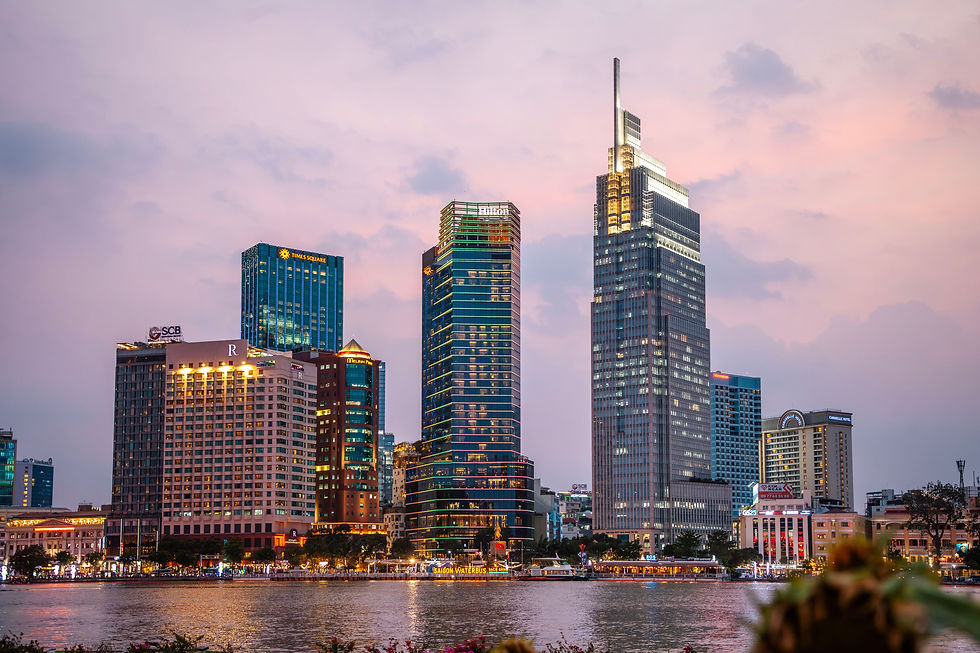
The group then expanded rapidly. By 2015, it had joined forces with Vietnamese businesses including electronics retailer Nguyen Kim and supermarket chain Lan Chi Mart. This helped Central move beyond fashion and establish a much broader retail presence.
The strategy was not simply to open more stores. Central progressively built an ecosystem covering food, non-food retail and property, allowing different parts of the business to support one another.
By 2019, Central Retail Vietnam had reached THB 37 billion in revenue. By 2022, sales had risen to THB 38.6 billion, representing around 22% of Central Retail’s total sales at the time.
The scale of the operation continued to increase. By September 2026, Central Retail had invested more than THB 49 billion in Vietnam and operated more than 300 locations across 26 provinces.
The important part: Central did not simply copy Thailand
This is perhaps the most interesting part of the story.
A company entering a new market can be tempted to reproduce the concept that made it successful at home. Central took a different approach in Vietnam: it brought its experience from Thailand, but adapted its concepts to local lifestyles.
One example is GO!. The concept was developed from the Thai Robinson Lifestyle Center model and subsequently adapted for Vietnamese consumers.
The same approach can be seen across Central Retail’s specialty businesses. The group has specifically highlighted the remodelling of concepts such as Supersports, Food City, Kubo and Hello Beauty to better fit Vietnamese lifestyles.
This distinction matters. International expansion is rarely about taking an existing formula and changing the country name. Consumer habits, shopping preferences, city structures and expectations can change significantly from one market to another.
For Central, local adaptation became part of the business model itself.
Going beyond Hanoi and Ho Chi Minh City
Another interesting element of Central’s strategy is its focus on secondary cities.
Vietnam’s retail growth is not limited to its two largest urban centres. As incomes rise and modern retail becomes more widespread, opportunities are increasingly appearing outside Hanoi and Ho Chi Minh City.
Central has therefore developed a network extending into provincial markets rather than concentrating exclusively on the country’s biggest cities.
The opening of GO! Dong Nai in January 2026 illustrates this approach. The renovated 52,000-square-metre shopping centre includes a hypermarket, more than 50 brands and a mix of retail, restaurants, healthcare, entertainment and other services. The project was expected to create around 1,000 jobs across the centre, tenants and suppliers.
The strategy is increasingly about reaching consumers where they live, rather than simply establishing flagship locations in the largest cities.
Building local connections
Central’s expansion also illustrates how international companies can become integrated into a local business ecosystem.
The group has developed local sourcing programmes that purchase agricultural products directly from Vietnamese farmers and cooperatives. It has also used its retail spaces to give local businesses opportunities to reach consumers through initiatives such as farmers’ markets.
This creates a relationship that goes beyond the traditional idea of a foreign retailer selling imported products.
At the same time, Central has used its networks in both countries to facilitate trade between Thailand and Vietnam. Products can move through the group’s distribution networks in both directions, creating commercial links between the two markets.
For an international company, this type of local integration can become an important part of long-term expansion.
Vietnam is becoming more important to the group
Central’s continued investment suggests that the company sees its Vietnamese operations as a long-term business rather than a regional experiment.
In March 2026, Central Retail announced a THB 16–18 billion investment programme for the year, including new stores and renovations across Thailand and Vietnam. The company identified both markets as key priorities for its growth strategy.
Then, in September 2026, Central Group announced plans for another $1.5 billion of investment in Vietnam over the next 10 to 15 years. This would bring the group’s total investment in the country to around $3 billion.
The next phase is expected to focus not only on retail, but also on property and expansion into new locations across the country.
In other words, Central is no longer testing whether its business model can work in Vietnam. It is continuing to build around it.
What the Central Group case tells us
Central Group’s story is interesting precisely because it is not simply a story about a successful Thai company entering Vietnam.
It is a case study in how international expansion actually works.
The company brought capital, experience, brands and operational expertise from Thailand. But it also relied on Vietnamese partners, local suppliers, local employees and an understanding of Vietnamese consumers.
The result is not a Thai retail model reproduced in Vietnam. It is a business that has evolved through the interaction between the two markets.
For companies considering expansion across Southeast Asia, this distinction is important. Regional proximity can make a new market easier to approach, but it does not eliminate the need for local knowledge.
Central Group’s experience shows that the challenge is not necessarily to choose between a Thai or Vietnamese way of doing business. It is to understand what can be transferred, what needs to be adapted, and where local expertise becomes essential.
More than a decade after entering Vietnam, Central’s next investment cycle suggests that the answer is still being developed.

Comments